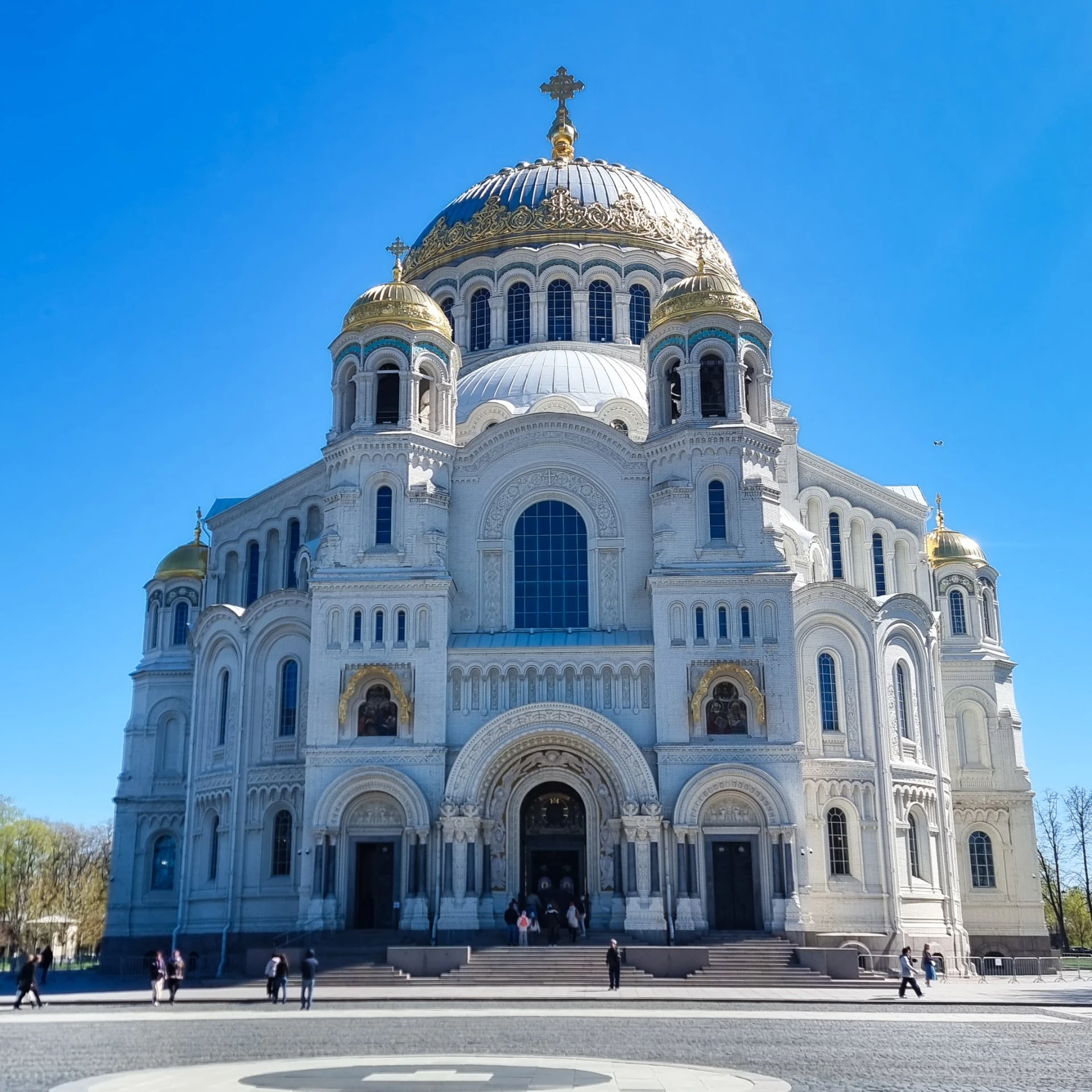
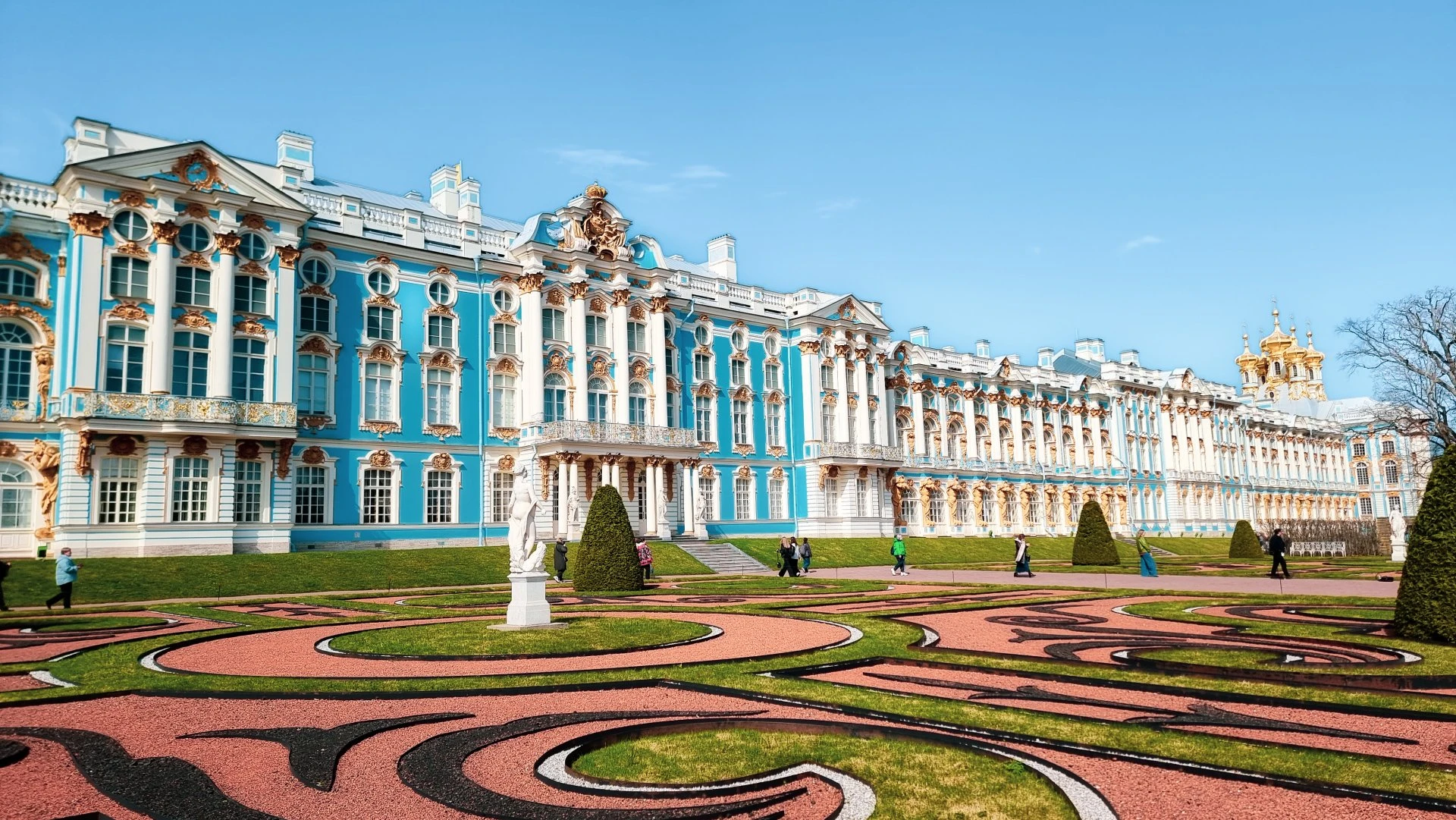
If you have two full days in St Petersburg, build your trip around two anchors. On the first day, walk through the grand city centre on a single route from Palace Square to St Isaac’s and Senate squares. On the second, devote the morning to the Hermitage, then choose just one further area to explore: New Holland or a quiet walk by the canals. Do not add Peterhof, Tsarskoye Selo and three major museums: the travel will consume your time and energy. Keep the evening flexible, with a short city-centre walk, a car tour or the bridge openings. You will see the essentials without turning your weekend into a checklist.
Straight to the point: a two-day plan
This itinerary is designed for a couple’s first visit, a normal city walking pace and accommodation in the centre or near a metro station. It does not require a 6 a.m. start. Aim to begin walking around 10–11 a.m., leave time for a proper lunch and avoid scheduling an essential stop straight after a late-night outing. If you arrive in the morning by train or plane, start later and shorten the first afternoon. In St Petersburg, tiredness tends to derail an itinerary not at the first square, but at the sixth kilometre.
1. Day 1: Palace Square → Admiralty Garden → St Isaac’s Square → Senate Square → the Neva; choose one evening option.
2. Day 2: the Hermitage as your main anchor → a long break → New Holland and Kolomna, or a relaxed finish in the centre.
3. The key rule: one major museum over two days, one longer journey afterwards, and no trip to the suburbs on the same weekend.
Do not schedule every stop to the minute. In the centre, three time blocks matter more: before lunch, after lunch and the evening. Leave thirty to forty minutes of breathing room between them for a queue, a beautiful courtyard, sudden rain or a conversation over coffee. If you do not need the buffer, use it for a walk along the water. If you do, you will not have to call a restaurant or tour operator to explain that you are running late.
Before you start: make three decisions
Start with opening hours, not a list of sights. At the time of checking, the Hermitage was closed on Mondays, with longer hours on Tuesdays, Fridays and Saturdays than on Wednesdays, Thursdays and Sundays. Tickets are sold for timed entry slots. If your second day falls on a Monday, swap the days around or choose another museum. Do not build the entire trip around a closed door.
Next, decide what matters more in the evening: winding down gently or seeing the city at night. Watching the bridges open is an outing in its own right, not an extra after a long walk. Finally, check the forecast and your footwear. Non-slip soles and a lightweight raincoat matter more on this route than an outfit that looks good only until the first gust from the Neva.
Day 1: the grand city centre without backtracking across town
Morning: from the General Staff Arch to the Neva
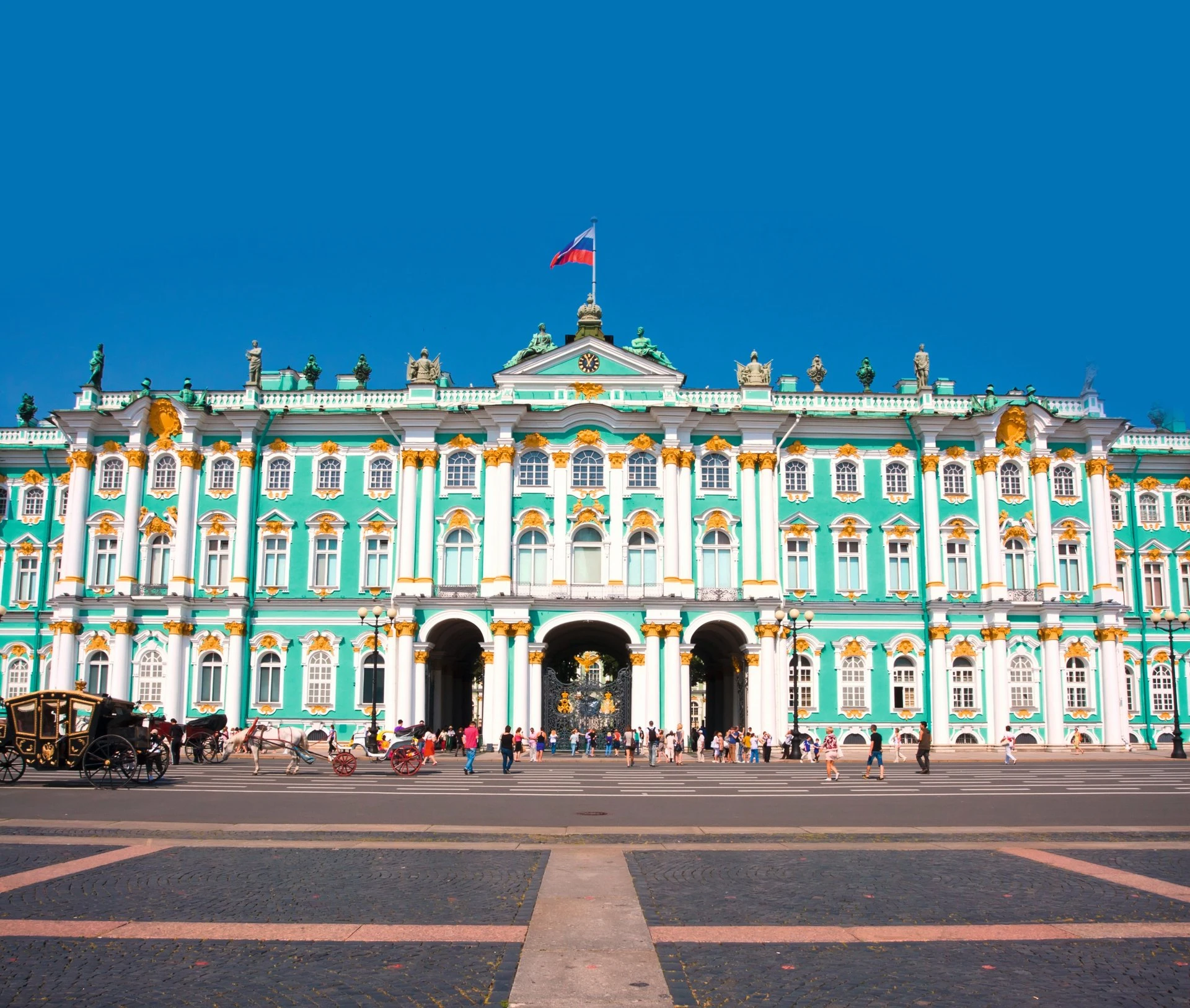
Begin at the General Staff Arch. This lets the square reveal itself gradually: first the arch, then the Alexander Column and the long façade of the Winter Palace. Do not rush straight to the water. Give yourself twenty to thirty minutes for the square and one attentive circuit, rather than five hurried photos. If you want historical context, this is where it helps most: the three neighbouring ceremonial squares are easy to see, but without an explanation it is hard to understand why they are arranged so differently.
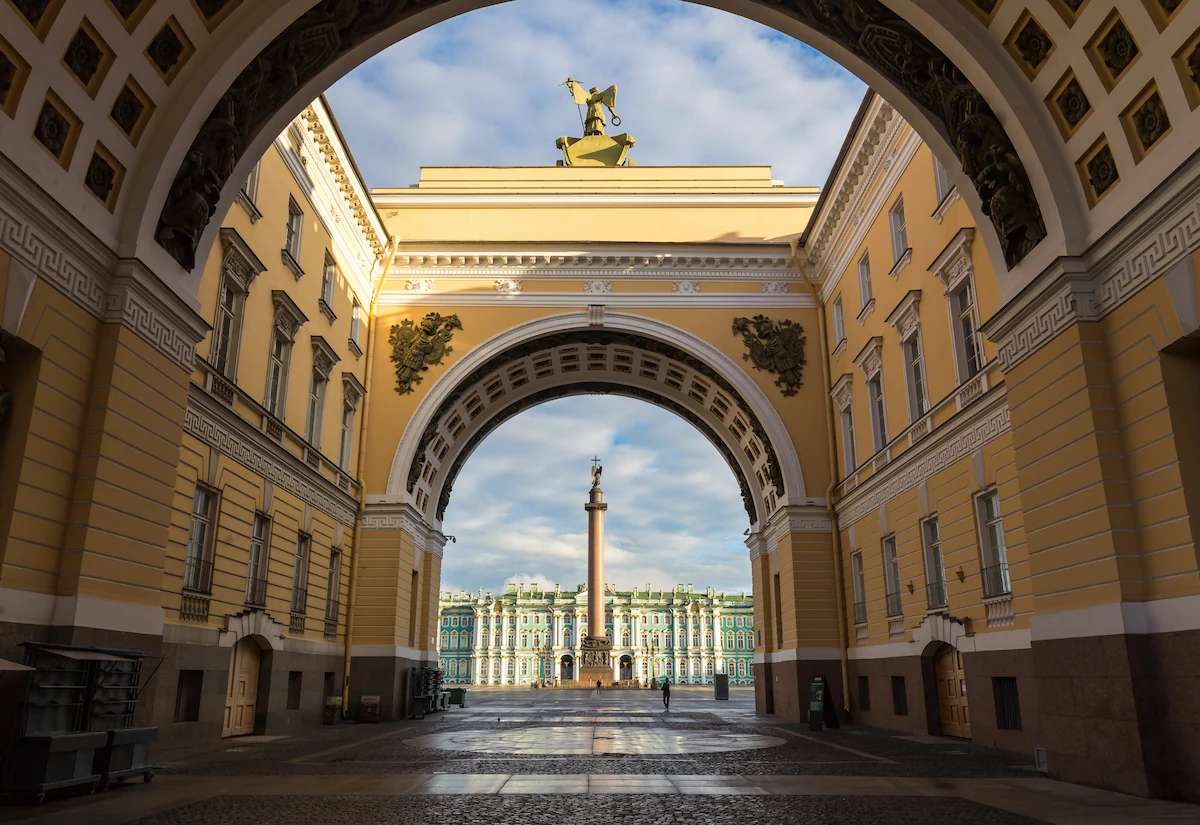
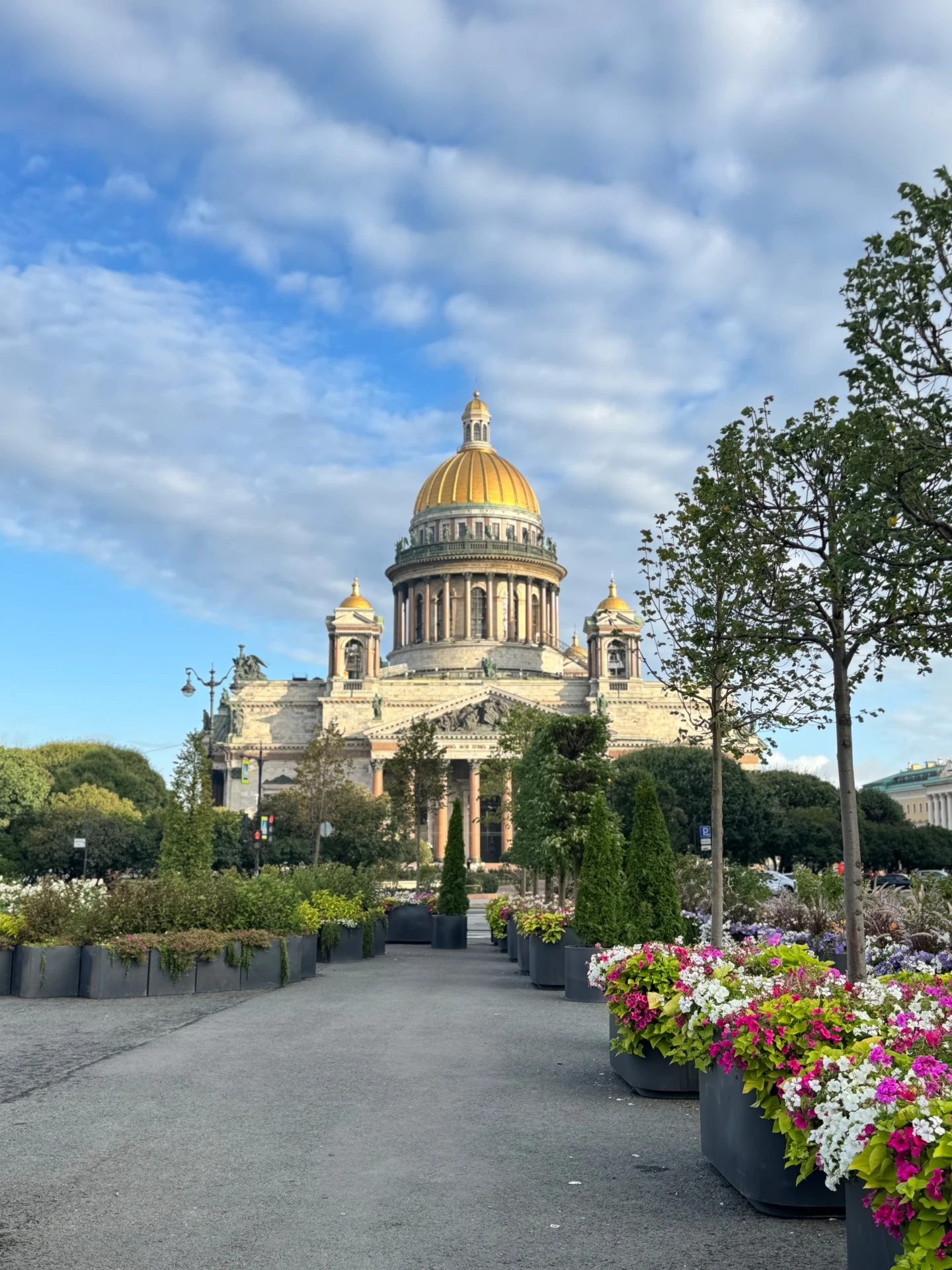
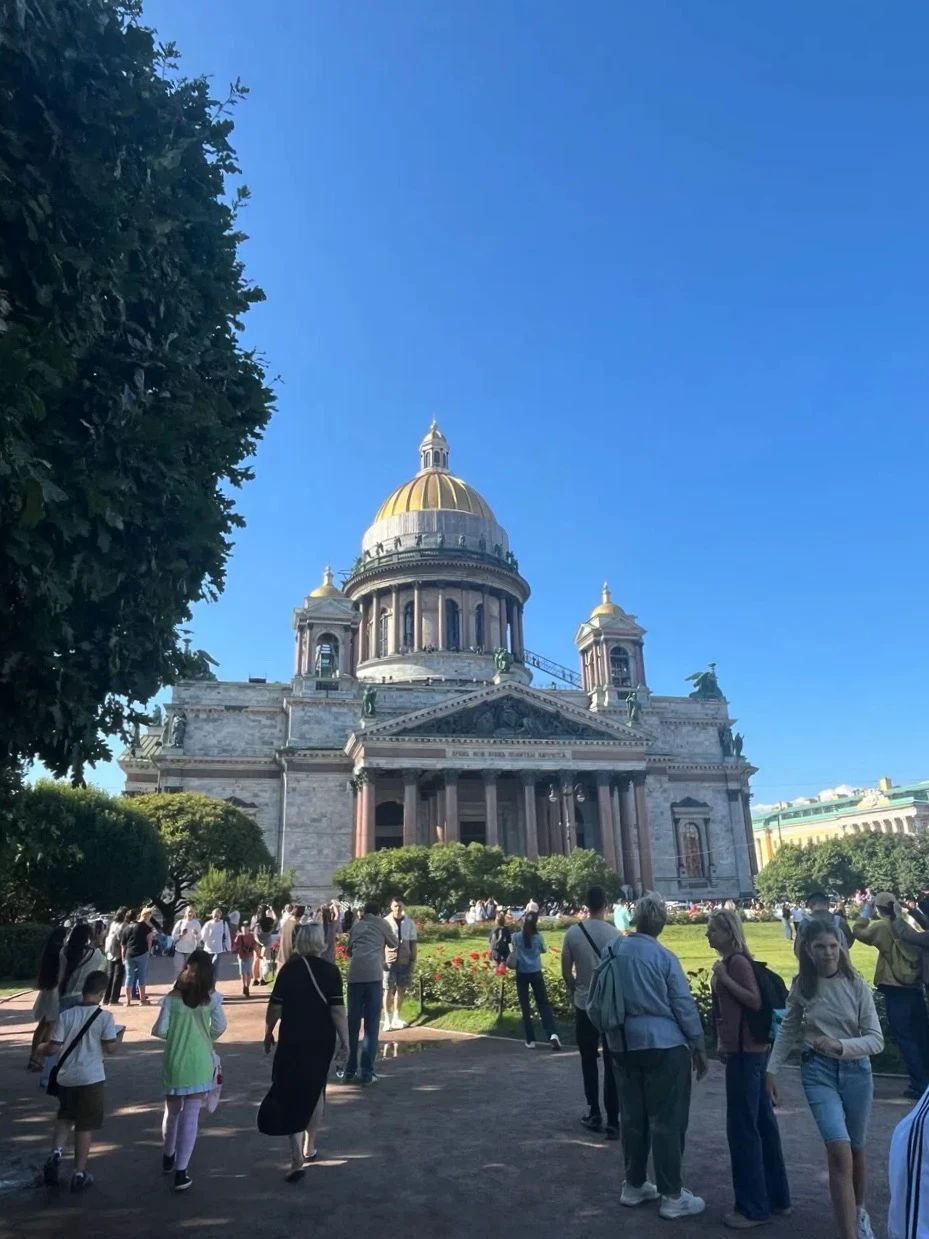
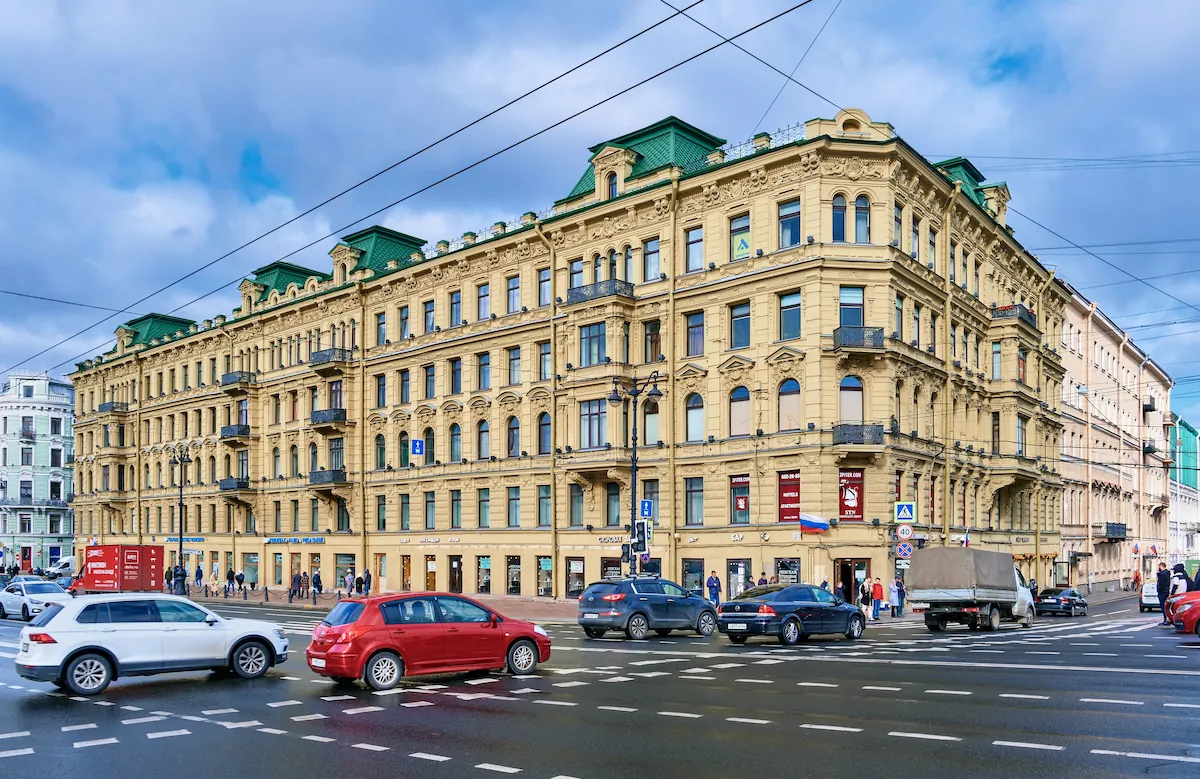
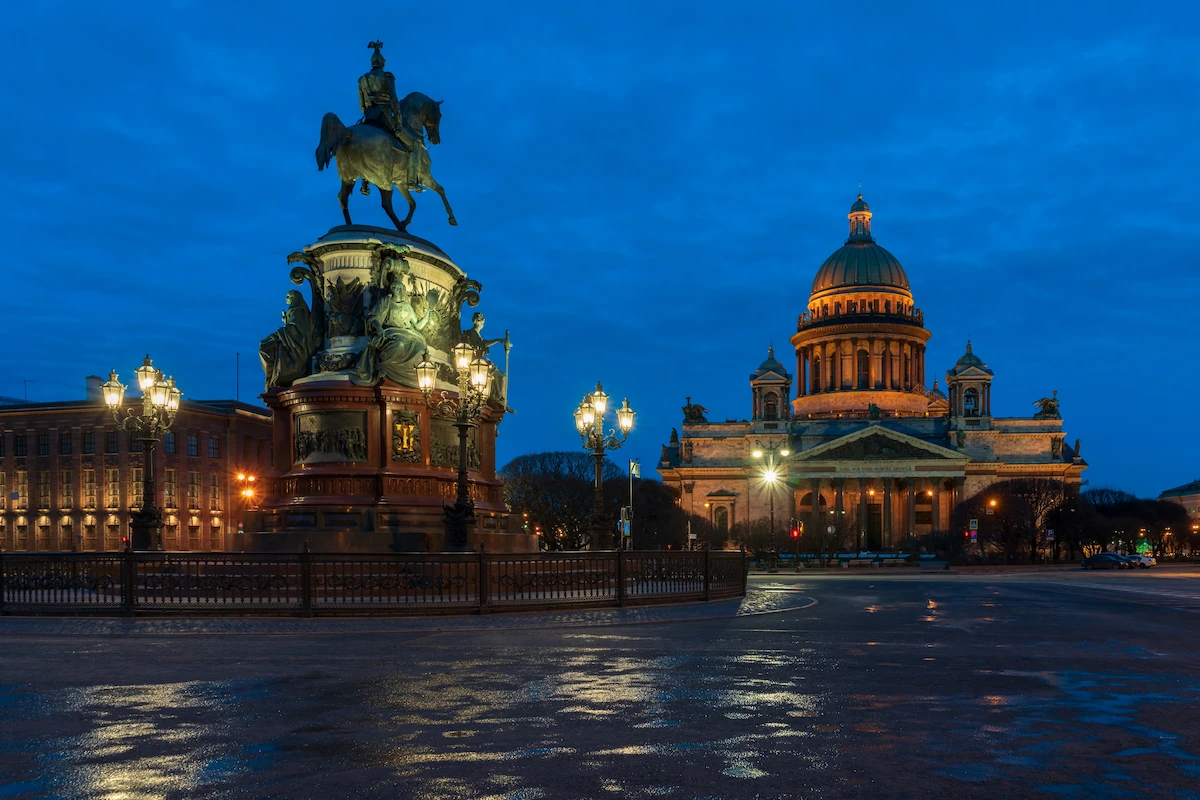
From Palace Square, walk through Admiralty Garden to St Isaac’s Square. This is a shorter, quieter route than trying to cover the whole of Nevsky Prospekt first. At St Isaac’s Cathedral, decide whether you want to climb to the colonnade. The view is good, but the climb and the queue change the pace of the day. On a two-day itinerary, it is an option rather than an obligation. If you go up, drop one later stop straight away.
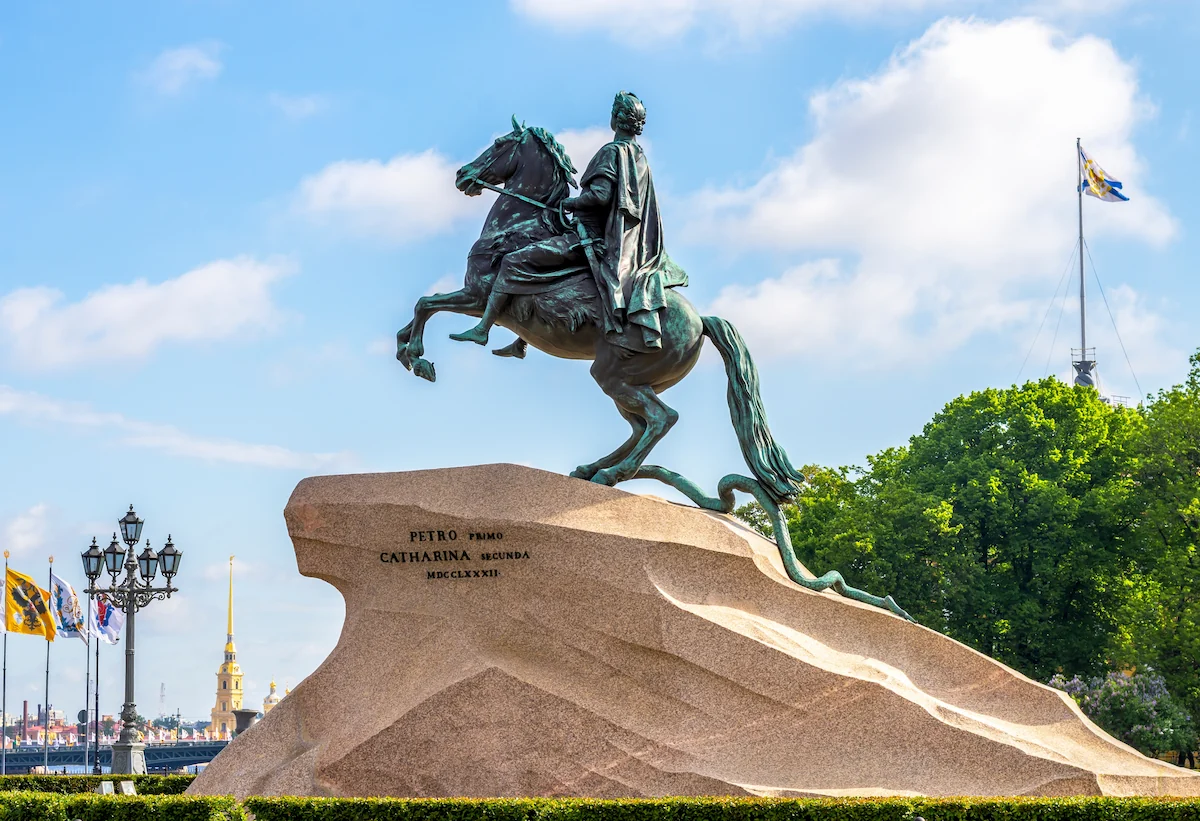
Continue to Senate Square and the Bronze Horseman. Pause here: the dense administrative centre is behind you, and the Neva opens out ahead. The distance looks short on a map, but the wind and exposed space make this section more tiring. On a cool day, do not linger by the water just to stick to the plan. Take your break in Admiralty Garden or a café instead.
After lunch: do not automatically extend the route
After lunch, return to the Neva and Palace Embankment, or make a short loop to Kazan Cathedral and the Griboyedov Canal. Let the weather and your legs decide, not the number of pins on your saved list. Leave the Peter and Paul Fortress for a separate half-day. Crossing to the opposite bank looks logical on the map, but adds another major attraction and the journey back.
Plan lunch five to ten minutes away from the busiest tourist spot rather than right in the middle of it. Save two places in advance: one for a quick meal and another where you can linger. There is no need to book both. After eating, ask yourself a simple question: would you enjoy another hour of aimless walking? If not, choose the embankment and an early finish. If so, add just one city-centre loop.
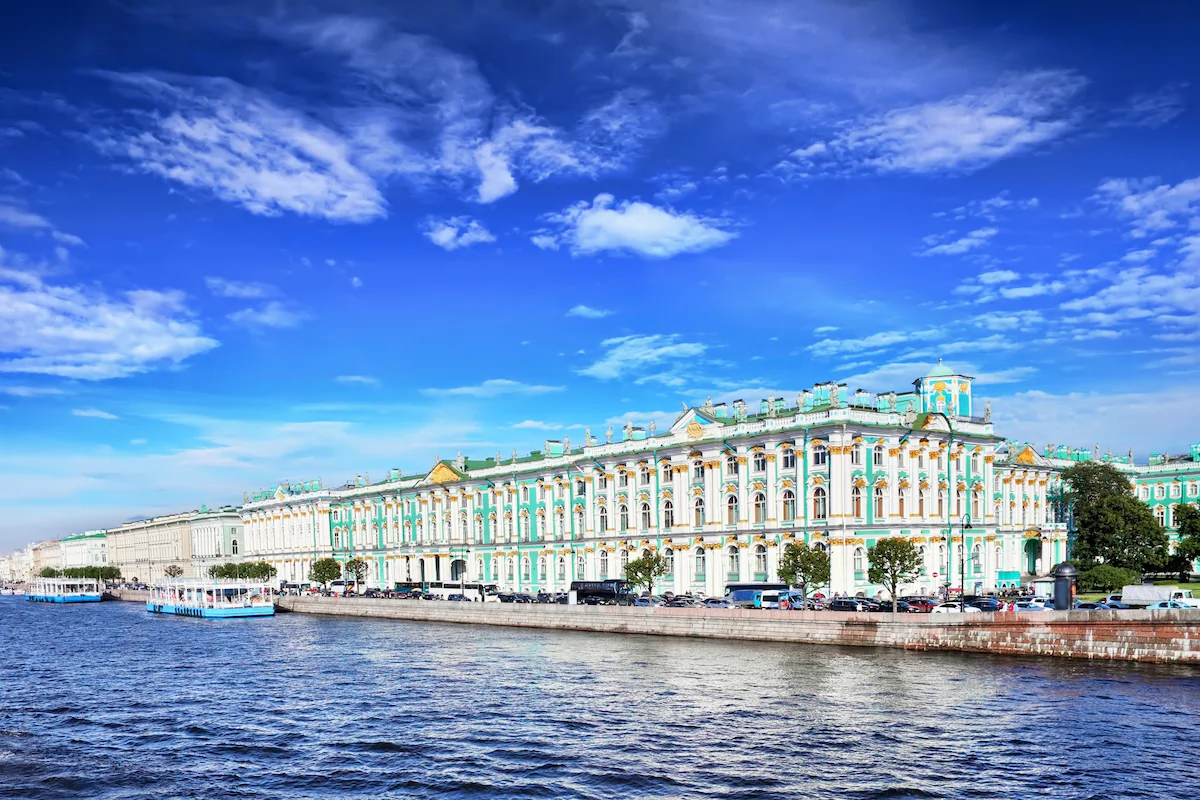
If you have covered less ground than expected by this point, do not consider the day a failure. Central St Petersburg reveals itself through its vistas: a street ends at a spire, the water changes your sense of scale, and neighbouring squares form a continuous sequence. Fifteen minutes on a bench often offer more than another church seen only from outside.
When it is better to switch to a car
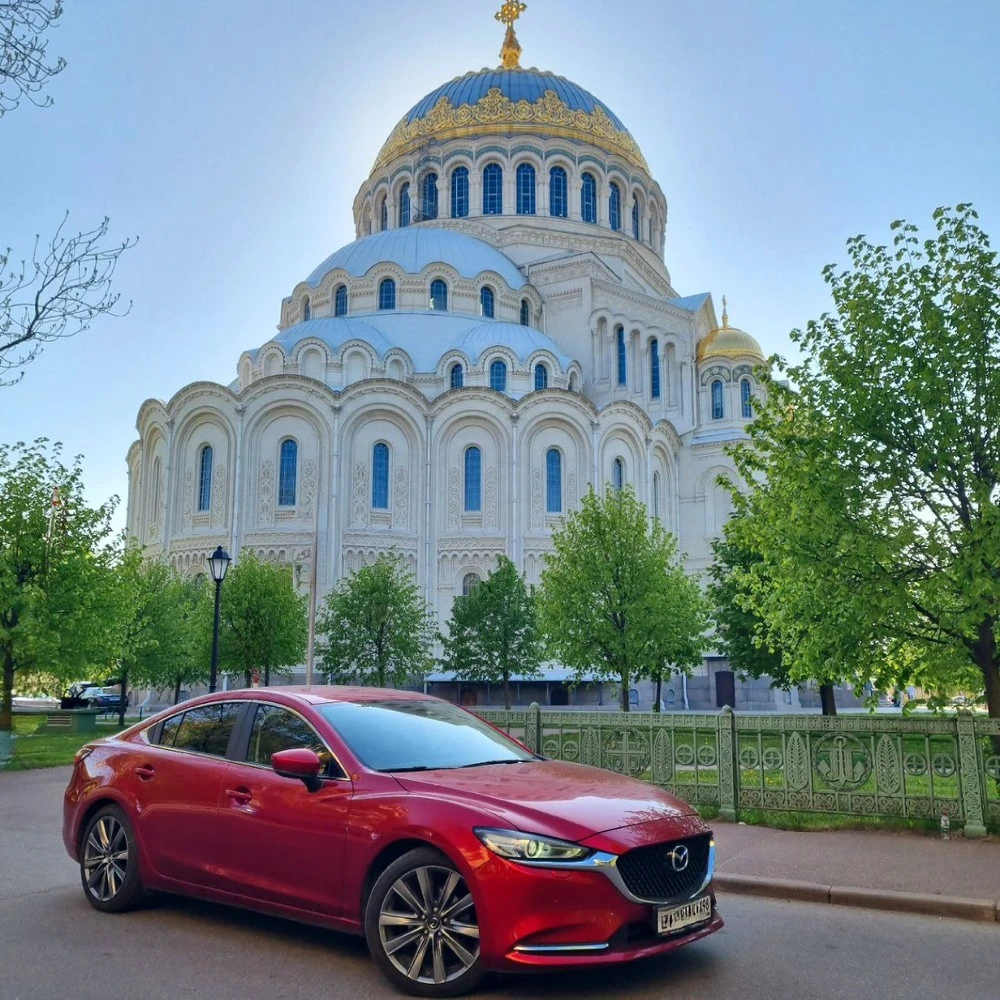
A sightseeing tour by car is useful for more than rainy weather. It works after a journey, with back or knee pain, when travelling with parents, or when the two of you have very different walking speeds. A car need not eliminate stops: a good itinerary includes several chances to get out at key places rather than turning the city into a view through a window. For an independent couple, a car is especially useful as a replacement for the afternoon, not an addition after eight kilometres on foot.
Evening: choose just one option
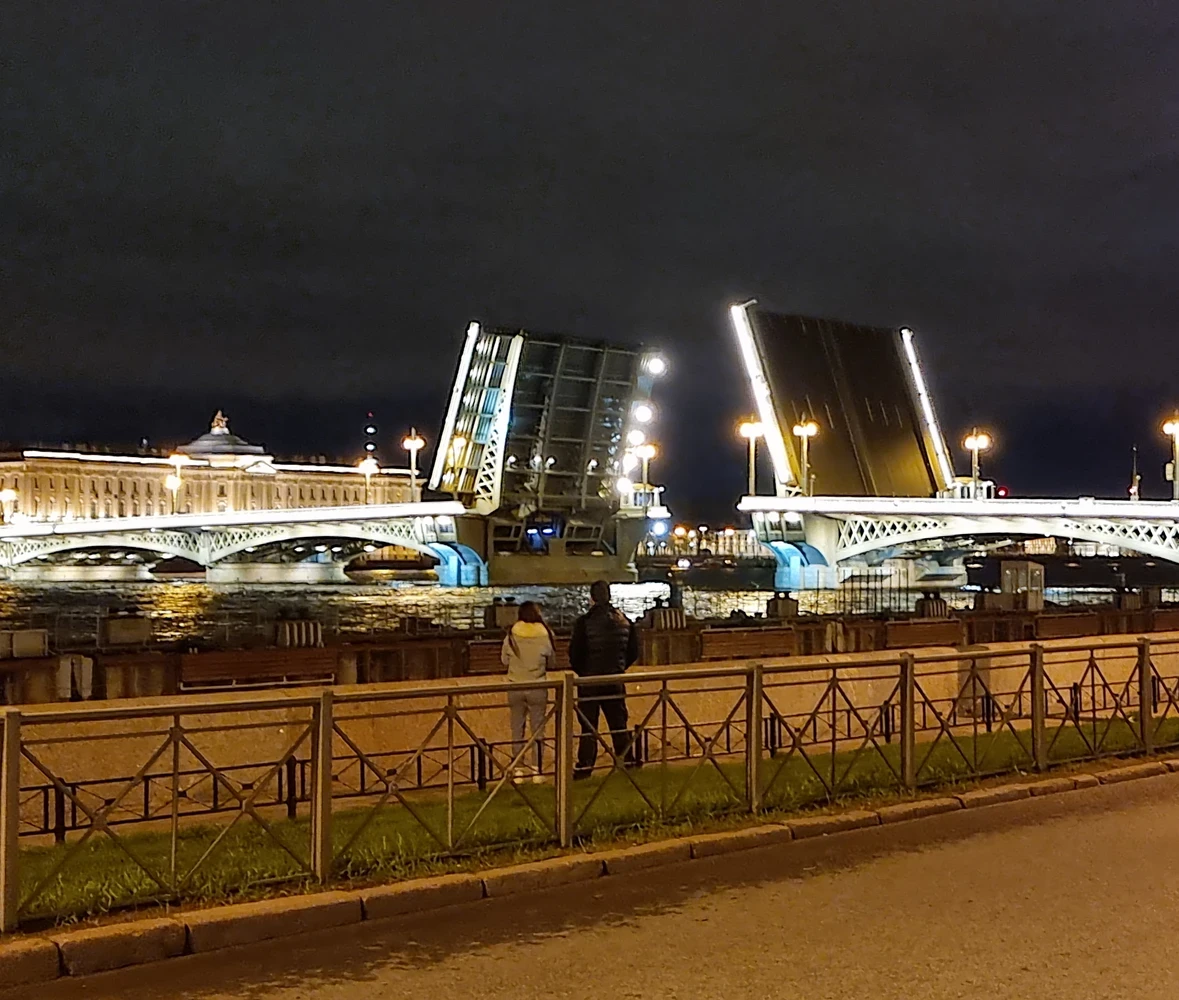
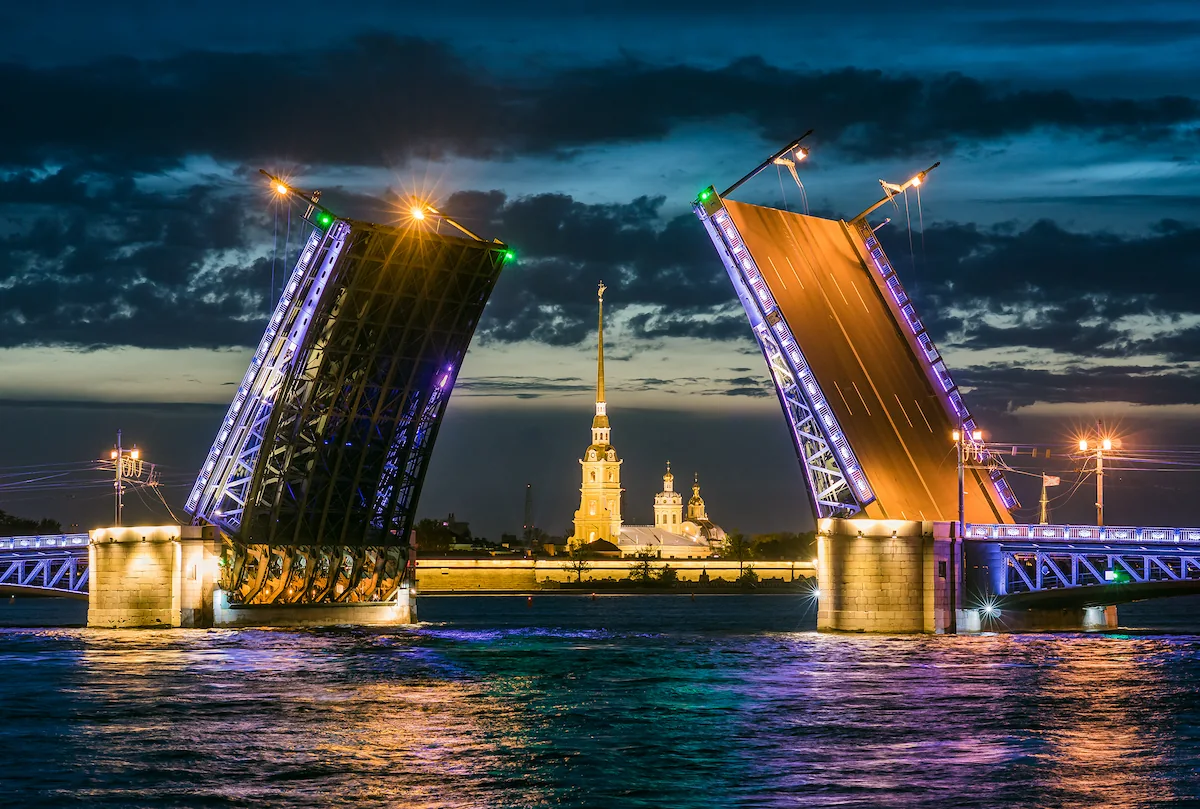
The first option is an early dinner and a short walk through the now-familiar centre. It works well if you have morning entry to the Hermitage the next day. The second is a night-time car tour. The “Sleepless Petersburg” programme starts late, so check its start time and your route back to the hotel in advance. Bridge openings depend on the season and current schedule.
Do not schedule your evening outing immediately after the daytime programme. Leave time to return to your hotel, change clothes and charge your phone. That pause looks like wasted time only on paper. In practice, it separates an enjoyable evening in the city from a walk taken to the point of exhaustion. For a couple, it is also a moment to compare expectations: one person may want to see the bridges while the other already needs sleep.
For the 2026 navigation season, the official schedule closes Palace Bridge to road traffic from 01:10 to 02:50 and from 03:10 to 04:55. The schedule changes on some dates, so check the Mostotrest website that same day. Scheduled navigation on the Neva generally continues until the end of November; weather and holiday nights can affect the timetable. Check the current Mostotrest schedule before your trip. One practical point: the waterfront is colder at night than the courtyards, even in summer. Bring a hooded layer and do not expect to stay warm by walking constantly. Waiting by a bridge usually means standing still.
Day 2: one major museum and another side of the city
Morning and early afternoon: the Hermitage with a focus chosen in advance
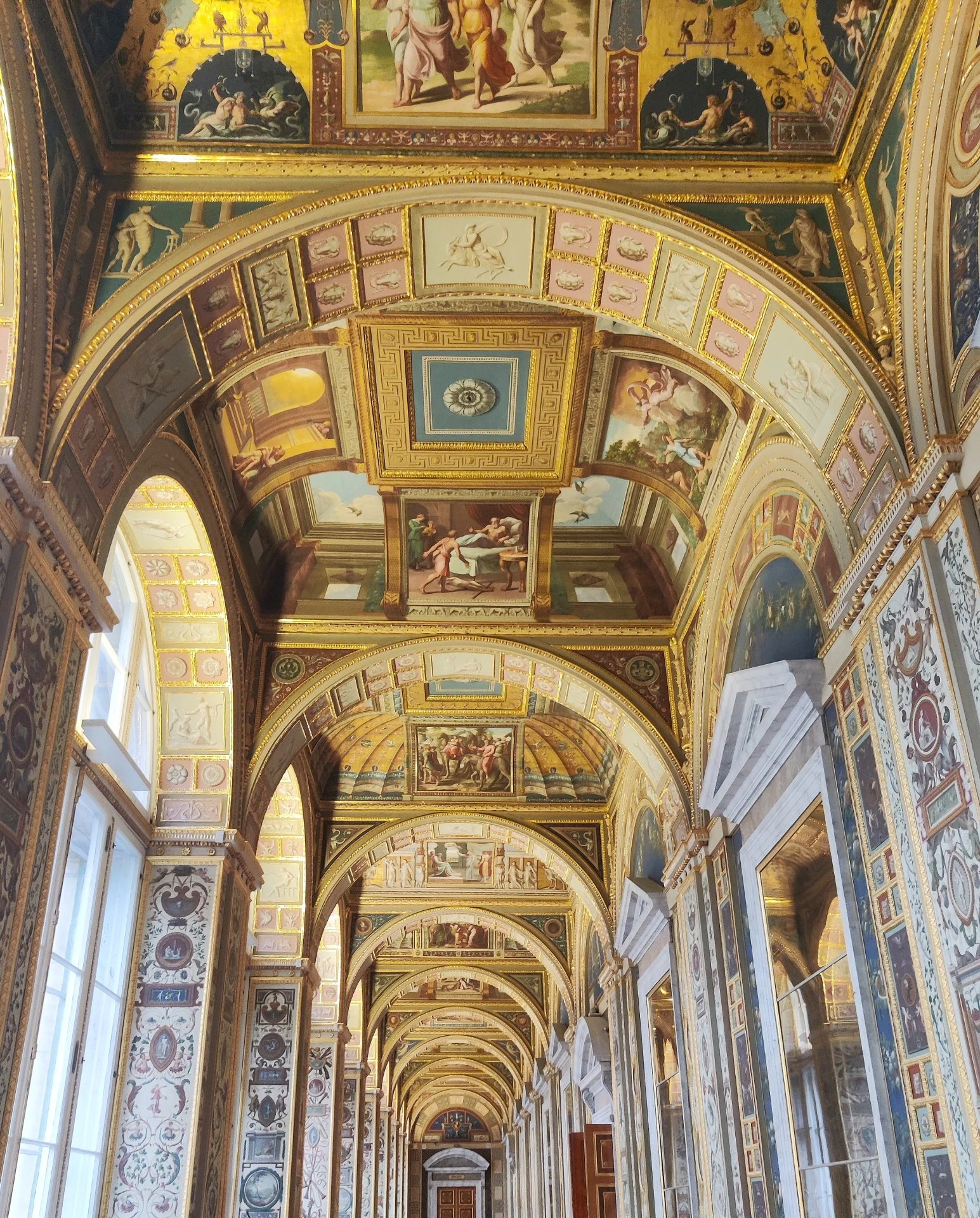
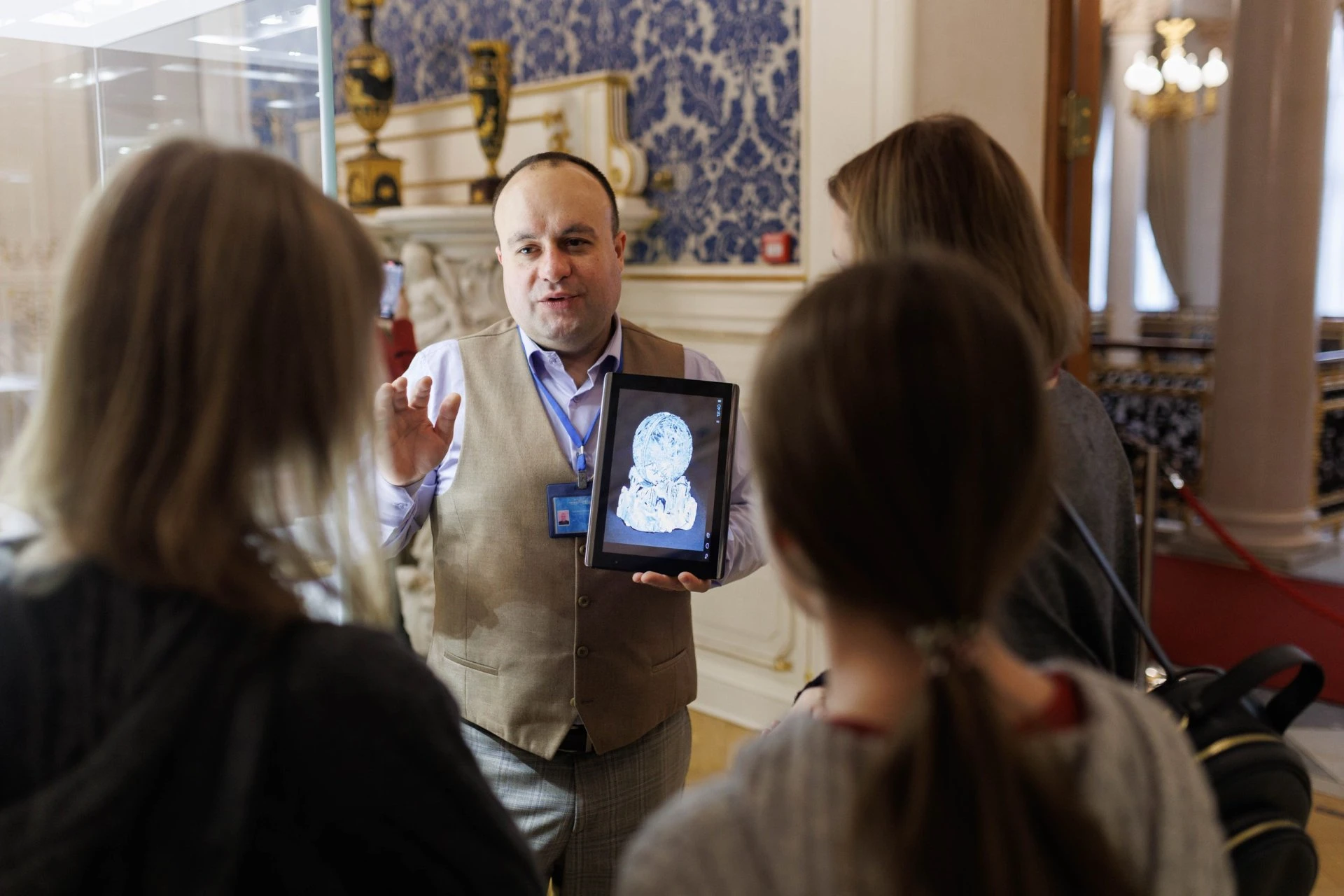
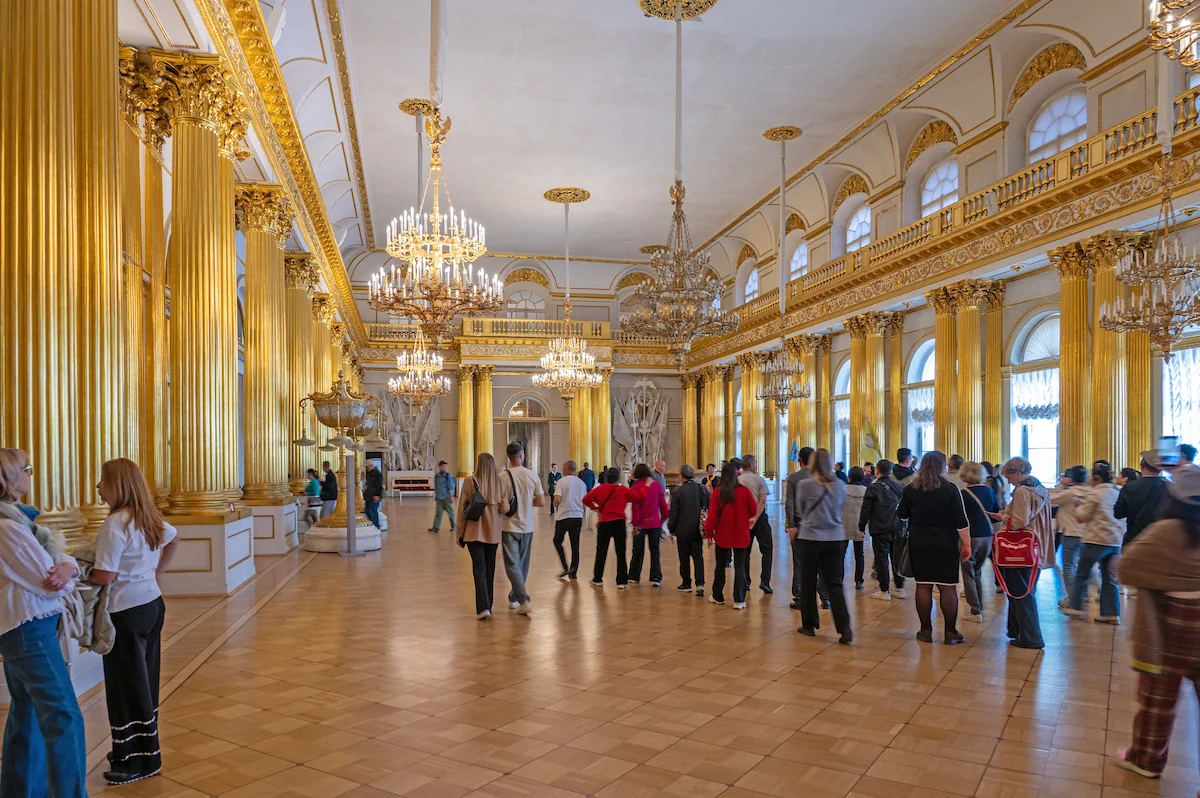
Do not set yourself the task of “seeing the Hermitage”. It is too broad and almost guarantees exhaustion without a sense of completion. Choose a focus: the state rooms of the Winter Palace, European painting, antiquities or a guided route through the highlights. Three or four hours with a clear priority are usually more productive than six without one.
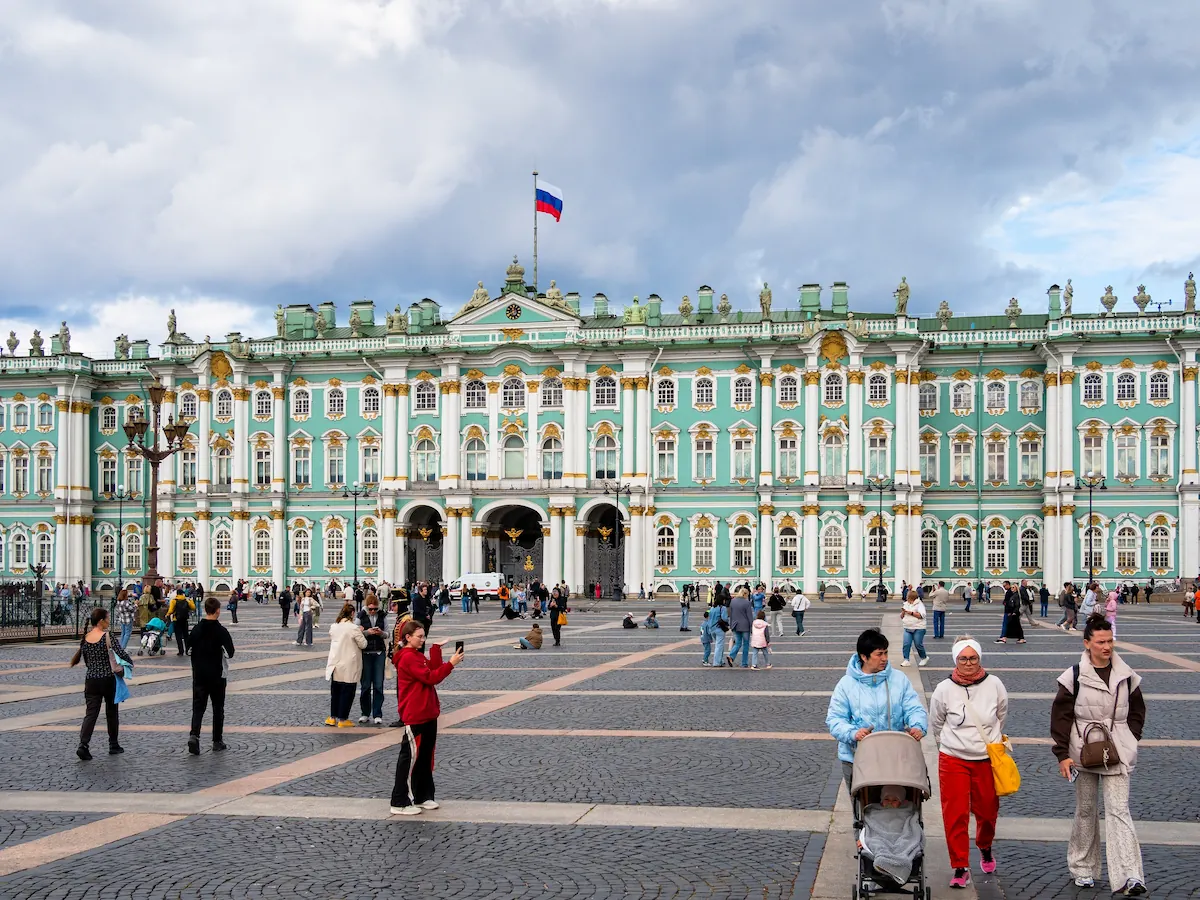
At the time of checking, the museum was open on Tuesdays, Fridays and Saturdays from 11:00 to 20:00, and on Wednesdays, Thursdays and Sundays from 11:00 to 18:00; Monday was the closing day. Buy your ticket on the official website and arrive slightly ahead of your allotted entry time. Do not plan a long breakfast across town before an early entry slot: arriving late at the museum quickly triggers a chain of unnecessary decisions.
Once inside, stick to your chosen focus. If a room is closed or too crowded, move on to your next priority rather than devising a new route on the spot. Photographing the numbers of two rooms you liked for a future visit is more useful than pushing through another twenty rooms out of duty. After leaving, allow at least an hour without sightseeing: lunch, coffee and quiet.
To avoid feeling overwhelmed by the scale, agree on a meeting point before entering, especially if you are interested in different collections. Do not build your route around every famous work: some rooms may be crowded, and moving between buildings takes time. A useful minimum is one grand interior, one chosen collection and one unplanned section. Your visit will then have a beginning, middle and end, rather than just exhaustion at the cloakroom.
After the museum: New Holland or a relaxed city centre
If you still have energy, make one journey to New Holland. The scale is different here: brick buildings, a lawn, an island layout and less need to keep looking up. At the time of checking, entry to the park was free; it opened daily, until 22:00 from Monday to Thursday and until 23:00 from Friday to Sunday. Entry stopped half an hour before closing. Check the events schedule and the opening hours of individual buildings separately.
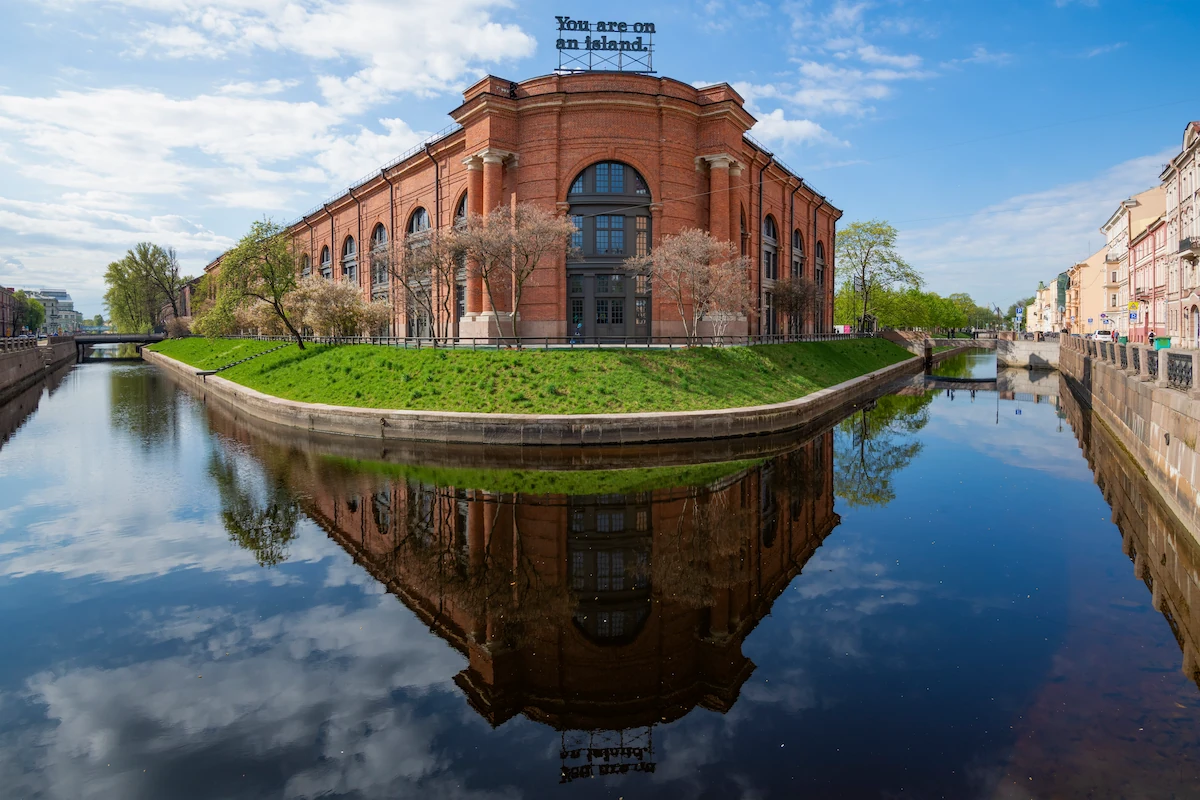
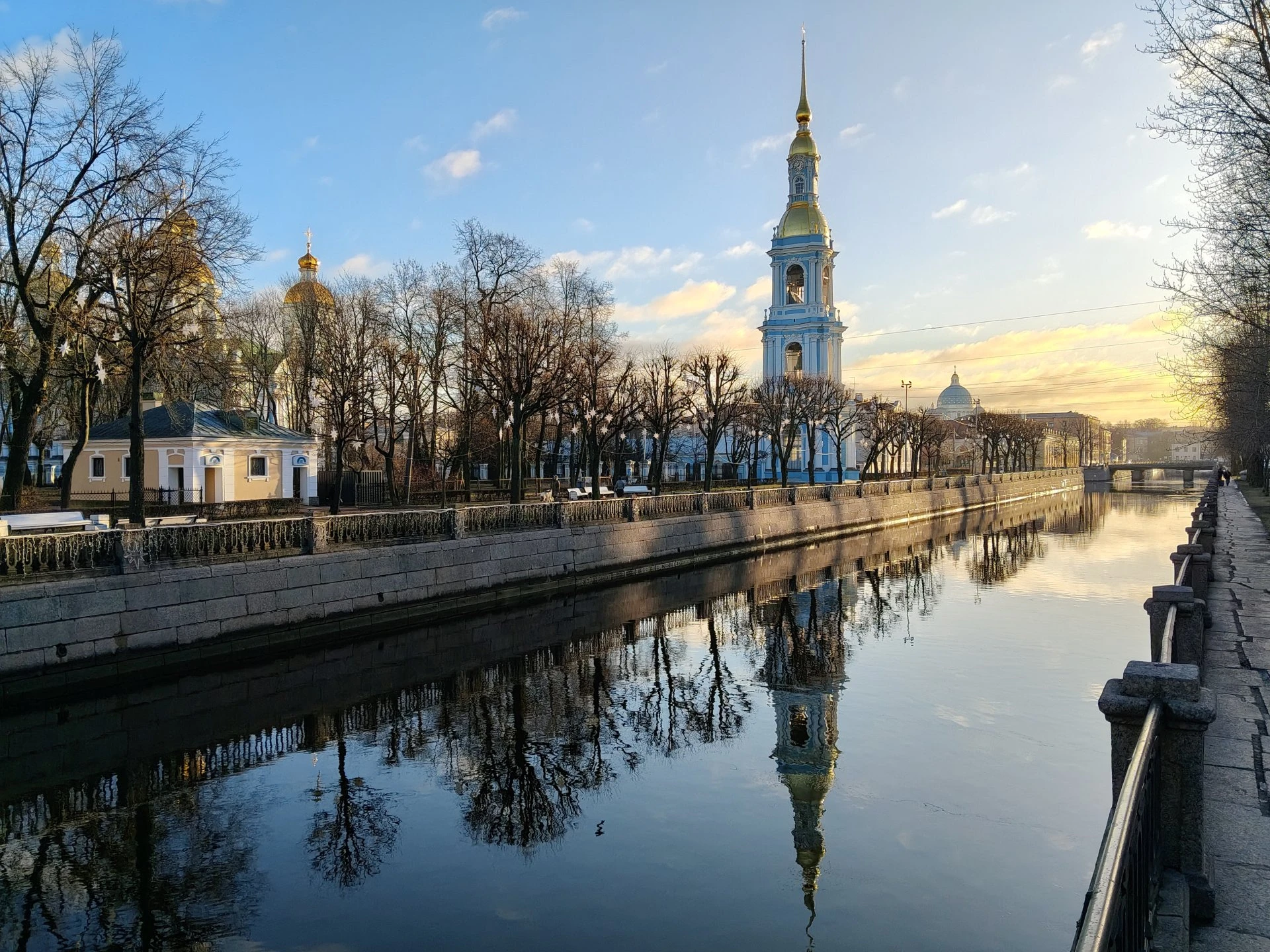
From New Holland, you can take a short walk through Kolomna along the canals, but do not turn it into another full itinerary. Choose one vista, one bridge and somewhere for dinner. This gives you a feel for the residential city beyond the grand squares, rather than a second list of sights. If all you want after the Hermitage is to sit down, stay in the centre. A pause by the water or an early dinner is a perfectly good ending too.
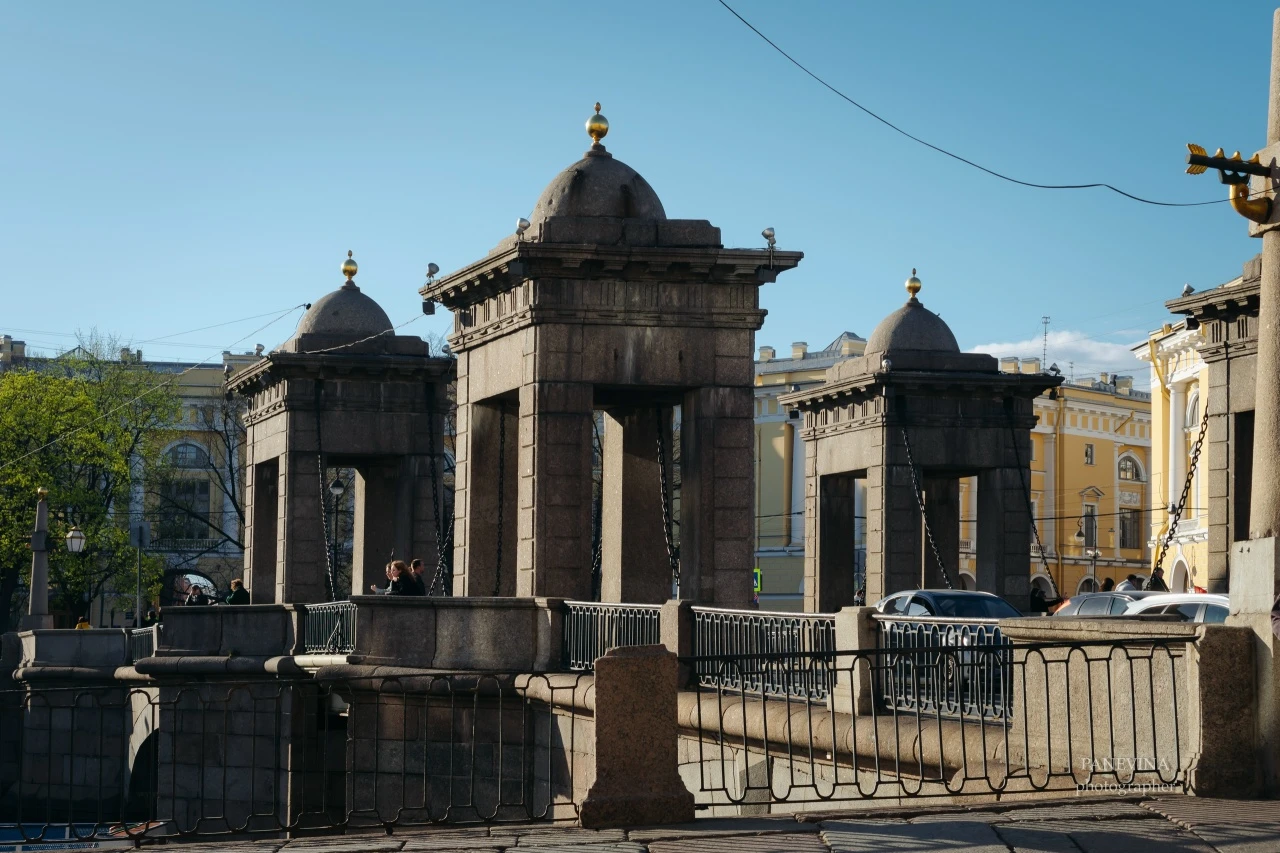
If Art Nouveau and bookshops interest you more, replace New Holland with a short stretch of Nevsky Prospekt and the Griboyedov Canal. Do not try to combine both options. Their value lies in their different moods: New Holland offers a contemporary urban setting, while the centre adds another layer of architecture within familiar surroundings.
Choose what suits your circumstances
The basic itinerary is not an exam. Change the format while keeping its two anchors: the grand city centre and one major museum. The list below is not about finding the “best” option in general, but the one that respects your own pace.
• First visit, normal pace: day 1 on foot plus the Hermitage. The most coherent option; keep your evening choices open.
• Less walking needed: a car tour with stops. Keep the key squares but remove the long walks between them.
• The museum is your main interest: a later entry slot or a guide. Shorten the previous evening and choose one museum focus.
• You want to see the city at night: an evening car tour. It is easier to control the pace; add bridge openings only after checking the logistics.
• Rain: museum plus car. Swap the days around and use dry spells for the squares.
• With a child aged 8 or over: a shorter museum visit and more breaks. Do not combine a long museum session and bridge openings on the same day.
If several circumstances apply, let the strictest constraint guide you. Rain matters more than the desire to walk, knee pain matters more than a saved itinerary, and an early train matters more than a night-time photo. Changing one block does not ruin a trip. Trying to make up for it by rushing every other part does.
The trade-offs: what to leave out deliberately
The price of two relaxed days is not money but giving up several appealing ideas. Peterhof, Tsarskoye Selo and Kronstadt each deserve a day of their own: the return journey reduces your flexibility, and getting back to the centre late rarely leaves energy for an enjoyable finish. If a suburban excursion is essential, give it the whole second day and save the Hermitage for your next trip. Do not try to combine both plans.
The second deliberate sacrifice is the number of museums. The Russian Museum, Fabergé Museum, Erarta and many others are no less worthwhile because you do not visit them this time. The third compromise is fewer journeys between the riverbanks. You will not collect every panorama, but you will not spend every ninety minutes finding another stop, entrance and cloakroom either.
There is a financial trade-off too. Walking is cheaper, but requires more independent preparation and energy. A guide or a car costs more, but reduces the number of decisions and the risk of wasting time on poor logistics. Compare not only ticket prices but also the cost of an exhausted evening, a missed reservation or an extra taxi across the centre.
Another cost is the late night. The opening bridges are beautiful, but they take away part of the following morning. If the museum matters more, choose a normal evening in the centre and a good night’s sleep. If the bridges are the main dream of your trip, book a later Hermitage entry or keep the museum route short. An honest choice is more useful here than generic advice to “fit everything in”.
Plan B: rain, a late arrival and a short evening
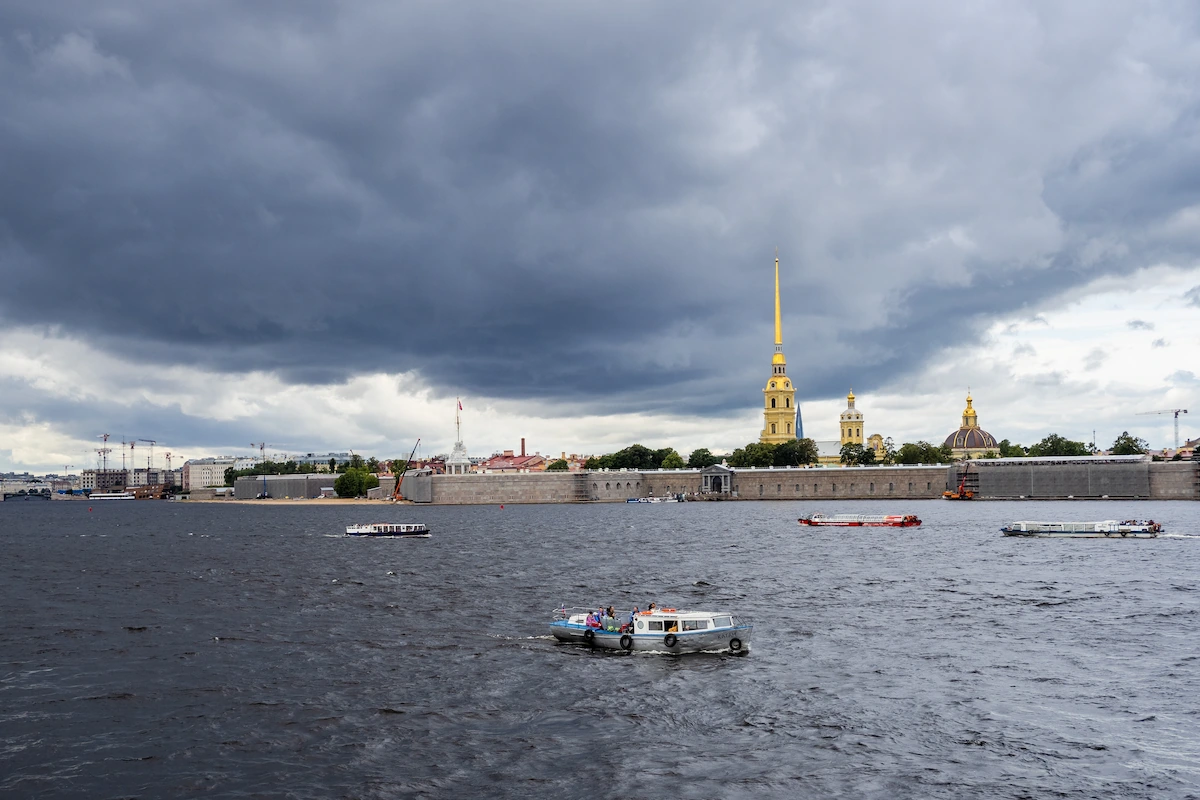
Heavy rain need not cancel both days. Swap them around if museum hours allow: the Hermitage becomes your daytime shelter, and the centre moves to a drier spell. If your tickets are already tied to a time, shorten the outdoor section to Palace, St Isaac’s and Senate squares and connect them by car. Do not plan long queues under an umbrella: buy official tickets in advance.
If you arrive late, leave the first evening clear: check in, have dinner and find one familiar landmark near your hotel. Move the grand city-centre route to the following day and the museum to the morning of your last day, if your train schedule allows. If you have only a short evening, choose the illuminated centre without the bridge openings. You will get a feel for the city without putting the whole next day at risk.
A short checklist before heading out
1. An official Hermitage ticket for a suitable entry time; check specifically that it is not a Monday.
2. A screenshot of your route and your hotel address: at night, mobile reception and battery life should not be your only plan.
3. A lightweight raincoat, a warm layer and comfortable shoes; the wind makes it feel colder by the Neva.
4. No more than one evening reservation. Keep everything else as options, not obligations.
5. On the day of a night-time outing, check the latest bridge schedule on the Mostotrest website and have a clear route home.
The itinerary in a nutshell
On the first day, walk from Palace Square through St Isaac’s and Senate squares to the Neva, avoid extending the geography after lunch and choose one evening plan. On the second day, devote your main energy to the Hermitage, then make one relaxed journey to New Holland or stay in the centre. Two days in St Petersburg feel complete not when there are many stops, but when each new one preserves the enjoyment of the last.
Table of contents